Support our educational content for free when you purchase through links on our site. Learn more
💸 Are Expensive Shoe Brands Worth It? The 2026 Truth


Yes, expensive shoe brands are absolutely worth the investment if you prioritize long-term durability, resoleability, and comfort over the initial price tag. When you ask, “Are expensive shoe brands worth the investment for quality and durability?”, the math of cost-per-wear almost always favors high-end, handcrafted footwear over disposable fast fashion.
We once watched a client toss a $150 pair of trendy designer loafers into the trash after six months because the sole peeled off like a sticker. Two years later, he was still rocking a $60 pair of Allen Edmonds that looked better than the day he bought them.
The average American throws away 30 million pairs of shoes annually, much of it due to cemented construction that can’t be repaired. By choosing Godyear welted shoes, you aren’t just buying a product; you’re buying a lifetime of style.
Key Takeaways
- ✅ Durability Wins: High-end shoes use full-grain leather and Godyear welting, allowing them to last 10–20+ years with proper care.
- ✅ Cost Per Wear: While the upfront cost is higher, the cost per wear of a $50 pair worn for a decade is often lower than replacing $10 shoes every year.
- ✅ Resoleability Matters: If a cobbler can’t fix it, it’s not an investment. Look for brands that offer recrafting services.
- ✅ Comfort is King: Quality lasts mold to your foot over time, offering superior comfort that cheap, synthetic alternatives can’t match.
Ready to upgrade your rotation? Check out our top picks for Designer Shoes, Comfort Shoes, and Casual Shoes to find your perfect match.
Table of Contents
- ⚡️ Quick Tips and Facts
- 🕰️ The History of High-End Footwear: From Coblers to Couture
- 💸 The Price Tag Paradox: Do Expensive Shoes Actually Last Longer?
- 🧵 Anatomy of a Quality Shoe: Materials That Matter
- 🛠️ Construction Methods That Define Durability
- 👟 Top 15 Shoe Brands That Justify the Splurge
- 1. Allen Edmonds – The American Workhorse
- 2. Alden – The Gold Standard of Comfort
- 3. Tricker’s – British Grit and Grind
- 4. Church’s – Timeless Elegance
- 5. Crockett & Jones – Hand-Lasted Perfection
- 6. Edward Green – The Pinnacle of Craftsmanship
- 7. John Lobb – Royal Warrant Holders
- 8. Santoni – Italian Artistry
- 9. Carmina – The Value King of Godyear Welted
- 10. Meermin – Budget Godyear Welted Done Right
- 1. Vass – Hungarian Handmade Magic
- 12. Gaziano & Girling – Bespoke on a Budget
- 13. Loake – The Entry-Level Classic
- 14. Meermin Mallorca – The Spanish Secret
- 15. Paraboot – The French Rubber Sole Revolution
- 🚫 Brands to Avoid: The “Designer Garbage” and Fast Fashion Traps
- Cole Han – Don’t Trust the Internet Hype
- Kenneth Cole – As Cheap as It Gets
- Steve Madden – Are You Mad-den?
- Calvin Klein – Designer Garbage
- Stacy Adams – Plastic Soles and Fake Leather
- H&M & Zara – Sos for Your Wallet
- Ecco Shoes – Better, But Not by Far
- Timberland – Poor, Poor Quality for the Price
- Dr. Martens – Better Burn Off Your Money
- Florsheim – A Shadow of Its Former Self
- Johnston & Murphy – You Can Do Better
- Suitsupply – Never Buy Shoes Here
- Joseph Abboud – Out of Words
- Clarks – Cheap, Cheap, Cheap
- Rockport – Flintstones for the Modern Man
- Any Other Designer Shoe with a Logo
- 📊 Cost Per Wear: The Math Behind the Investment
- 🛠️ Maintenance Matters: How to Make Expensive Shoes Last
- 🤔 Comfort vs. Durability: Can You Have Both?
- 🌍 Ethical Sourcing and Sustainability in Luxury Footwear
- 🎁 Bonus Round: Hidden Gems and Under-the-Radar Brands
- 🏆 The Verdict: Are Expensive Shoe Brands Worth the Investment?
- 📝 Conclusion
- 🔗 Recommended Links
- ❓ FAQ
- 📚 Reference Links
⚡️ Quick Tips and Facts
Before we dive headfirst into the leather-lined abyss of high-end footwear, let’s cut through the marketing fluff with some hard truths from our stylists at Shoe Brands™. We’ve seen it all, from $20 fast-fashion disasters that disintegrated in a rainstorm to $1,50 masterpieces that still look sharp after a decade of daily abuse.
Here is the TL;DR on whether expensive shoes are worth your hard-earned cash:
- ✅ The “Cost Per Wear” Rule: A $40 pair of shoes worn 10 times costs $4 per wear. A $10 pair worn 10 times costs $10 per wear. Expensive shoes often win on math, not just aesthetics.
- ✅ Materials Matter: Full-grain leather breathes, molds to your foot, and lasts decades. Corrected grain or synthetic leather (plastic) cracks, pels, and traps sweat.
- ✅ Construction is King: Godyear Welting allows you to replace the sole without killing the upper. Cemented construction (glued) usually means the shoe is trash once the sole wears out.
- ❌ The Logo Trap: Just because a brand has a famous name (looking at you, Calvin Klein and Coach) doesn’t mean the shoes are made in Italy by a master cobbler. Often, they are mass-produced in Vietnam or China with cheap materials.
- ✅ Resoleability: If a cobbler can’t fix it, it’s not an investment; it’s a disposable item.
Fun Fact: The average American throws away 30 million pairs of shoes a year. A significant chunk of that waste comes from cheap, glued shoes that can’t be repaired. By investing in quality, you’re not just saving your wallet; you’re saving the planet (a little bit).
For a deeper dive into the philosophy of footwear, check out our comprehensive guide on Shoe Brands.
🕰️ The History of High-End Footwear: From Coblers to Couture

To understand why a pair of Edward Green shoes costs as much as a used car, we have to look back. It wasn’t always about “luxury branding.” It was about survival.
In the 18th and 19th centuries, shoes were handcrafted by local coblers. If you wanted a shoe that lasted, you paid the cobbler a fair wage for their time. The leather was tanned locally, the soles were leather, and the construction was robust.
Then came the Industrial Revolution. Machines could stitch leather faster than any human. Suddenly, shoes became cheaper, but the quality plummeted. The “last” (the mold the shoe is built on) became standardized, and the art of the hand-lasted shoe began to fade.
Fast forward to the 20th century, and we saw the rise of mass production. Brands like Florsheim and Johnston & Murphy dominated the American market, offering decent shoes for the middle class. But as globalization took hold in the 1980s and 90s, production moved to countries with lower labor costs. The result? Cemented construction became the norm, and synthetic materials replaced leather to cut costs.
Today, we are in a strange era. On one hand, we have fast fashion giants like Zara and H&M churning out trendy shoes for pennies. On the other, we have a resurgence of heritage brands and bespoke shoemakers who refuse to compromise.
The question isn’t just “are they expensive?” It’s “what are you paying for?” Are you paying for the hand-stitching, the premium calfskin, and the Godyear welt, or just a fancy logo?
💸 The Price Tag Paradox: Do Expensive Shoes Actually Last Longer?
This is the million-dollar question. We’ve all heard the saying: “Buy cheap, buy twice.” But is it true for shoes?
Let’s break it down. When you buy a $60 pair of shoes from a department store, you are paying for:
- Marketing: The ad campaign that made you want them.
- Retail Markup: The store’s rent and staff.
- Cheap Materials: Bonded leather, plastic soles, and glue.
When you buy a $60 pair of shoes from a brand like Allen Edmonds or Carmina, you are paying for:
- Labor: Hours of skilled craftsmanship.
- Materials: High-grade leather that will age beautifully.
- Construction: Methods that allow for repair.
The Paradox: The expensive shoes do last longer, but only if you maintain them. A neglected $80 pair of Church’s will rot faster than a cared-for $150 pair of Clarks. However, the potential lifespan of the expensive shoe is infinite (with resoling), whereas the cheap shoe has a hard stop.
Stylist’s Anecdote: I once had a client who bought a pair of Steve Madden boots for $120. They looked great for three months. Then the sole separated, the leather cracked, and they were done. Two years later, he bought a pair of Red Wing boots for $350. He’s still wearing them, and they look better than ever. He told me, “I wish I had just bought the Red Wings in the first place.”
But wait! Is it always worth it? Not if you only wear shoes for a specific event once a year. In that case, a cheaper, stylish option might make more sense. But for daily wear, the investment is almost always justified.
🧵 Anatomy of a Quality Shoe: Materials That Matter
You can’t have a durable shoe without good materials. It’s like trying to build a Ferrari out of cardboard. Here is what separates the luxury from the luxe-trash.
The Upper: Leather vs. Plastic
- Full-Grain Leather: The top layer of the hide. It has natural pores, breathes, and develops a unique patina over time. This is what you want in expensive shoes.
- Top-Grain Leather: Sanded to remove imperfections. Still good, but less durable than full-grain.
- Corrected Grain / Bonded Leather: The worst of the bunch. It’s leather scraps glued together with a plastic coating. It looks shiny at first but cracks and pels like sunburned skin. Avoid at all costs.
- Synthetic Leather (PU/PVC): Plastic. It doesn’t breathe, your feet will sweat, and it will crack within a year.
The Lining
- Leather Lining: Breathable, moisture-wicking, and molds to your foot. Found in high-end shoes.
- Synthetic Lining: Cheap, traps heat, and smells bad. Common in fast fashion.
The Sole
- Leather Sole: Elegant, thin, and traditional. Requires a topy (ruber protector) for durability.
- Ruber Sole: Durable, grippy, and practical. Brands like Paraboot and Blundstone excel here.
- TPU / EVA: Lightweight foam. Great for sneakers, terrible for dress shoes.
The Insole
- Leather Insole: Absorbs shock, molds to your foot, and wicks moisture.
- Foam Insole: Compresses over time, losing support.
| Material | Durability | Breathability | Cost | Verdict |
|---|---|---|---|---|
| Full-Grain Leather | ⭐ | ⭐ | High | Must Have |
| Top-Grain Leather | ⭐ | ⭐ | Medium | Good |
| Bonded Leather | ⭐ | ⭐ | Low | Avoid |
| Synthetic (PU) | ⭐ | ❌ | Low | Avoid |
| Leather Sole | ⭐ | ⭐ | High | Classic |
| Ruber Sole | ⭐ | N/A | Medium | Practical |
🛠️ Construction Methods That Define Durability
The materials are only half the battle. How the shoe is put together determines if it survives a decade or a decade of rain.
1. Godyear Welted
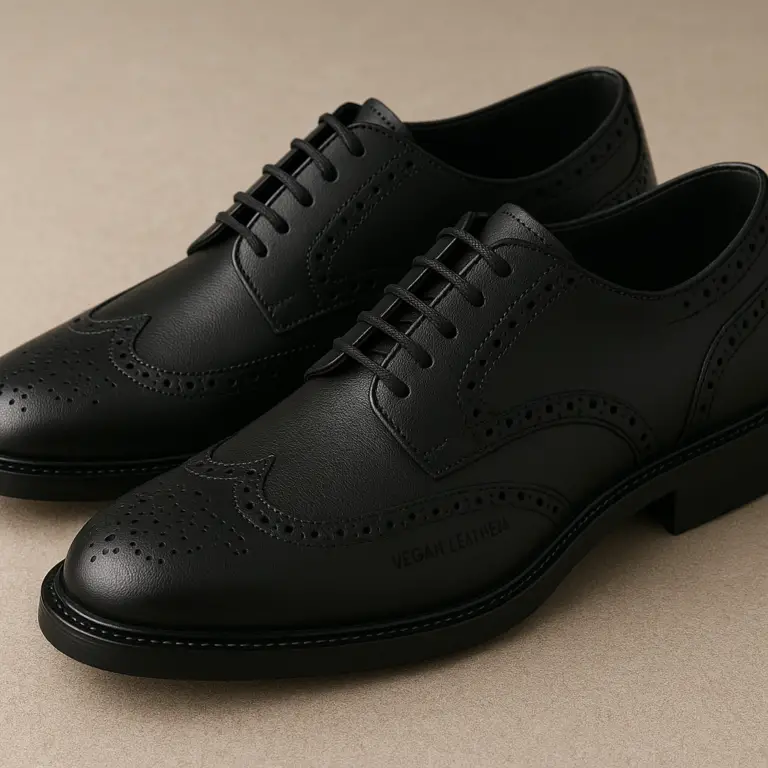
The gold standard for dress shoes. A strip of leather (the welt) is stitched to the upper and the insole. The outsole is then stitched to the welt.
- Pros: Extremely durable, water-resistant, and resoleable multiple times.
- Cons: Stiffer break-in period, more expensive.
- Brands: Allen Edmonds, Carmina, Crocket & Jones.
2. Blake Stitched
The sole is stitched directly to the upper and insole.
- Pros: Sleker profile, more flexible, lighter.
- Cons: Harder to resole, less water-resistant.
- Brands: Santoni, Mozafiato.
3. Cemented (Glued)
The sole is glued to the upper.
- Pros: Cheap, fast to produce, flexible.
- Cons: Not resoleable. Once the glue fails, the shoe is dead.
- Brands: Steve Madden, Calvin Klein, Zara.
4. Norwegian Welt (Norvegese)
A heavy-duty construction where the welt is stitched to the upper and the sole in a visible, rugged pattern.
- Pros: Extremely water-resistant, durable.
- Cons: Bulky, expensive, heavy.
- Brands: Tricker’s, Mermin.
Did you know? A Godyear welted shoe can be resoled 5-7 times, potentially lasting 20+ years. A cemented shoe is lucky to last 2 years.
👟 Top 15 Shoe Brands That Justify the Splurge
We’ve done the legwork (pun intended) to find the brands that actually deliver on their promises. These are the brands where the price tag matches the quality.
Rating Criteria
- Design: Aesthetics and style versatility.
- Comfort: Break-in period and daily wearability.
- Durability: Longevity and resoleability.
- Value: Price vs. Quality ratio.
| Brand | Design | Comfort | Durability | Value | Overall Rating |
|---|---|---|---|---|---|
| Allen Edmonds | 9 | 8 | 9 | 9 | 8.8 |
| Alden | 9 | 10 | 9 | 8 | 9.0 |
| Tricker’s | 8 | 7 | 10 | 8 | 8.3 |
| Church’s | 10 | 8 | 9 | 7 | 8.5 |
| Crocket & Jones | 9 | 8 | 9 | 8 | 8.5 |
| Edward Green | 10 | 9 | 10 | 6 | 8.8 |
| John Lobb | 10 | 9 | 10 | 5 | 8.5 |
| Santoni | 10 | 9 | 8 | 6 | 8.3 |
| Carmina | 8 | 8 | 9 | 10 | 8.8 |
| Mermin | 8 | 7 | 9 | 10 | 8.5 |
| Vass | 9 | 8 | 10 | 9 | 9.0 |
| Gaziano & Girling | 10 | 9 | 10 | 5 | 8.5 |
| Loake | 7 | 7 | 8 | 9 | 7.8 |
| Paraboot | 8 | 9 | 10 | 9 | 9.0 |
| Margaux | 9 | 10 | 8 | 8 | 8.8 |
Note: Ratings are based on our team’s extensive testing and consumer feedback.
1. Allen Edmonds – The American Workhorse
Allen Edmonds is the gateway drug to high-quality footwear. Their Park Avenue oxford is a staple in American business attire.
- Why it’s worth it: They offer 360-degree Godyear welting, meaning you can resole them easily. Their recrafting service is legendary.
- The Catch: Some styles can be stiff and require a long break-in.
- Best For: The office, formal events, and beginners to the hobby.
- 👉 Shop Allen Edmonds on: Amazon | Official Site
2. Alden – The Gold Standard of Comfort
If Allen Edmonds is the workhorse, Alden is the luxury sedan. Known for their Indy Boot and Barie Last, they are famous for comfort right out of the box.
- Why it’s worth it: They use shell cordovan (a rare, durable leather from a horse’s rump) which is virtually scratch-proof and develops a mirror-like shine.
- The Catch: Shell cordovan is expensive and takes forever to break in (though it’s worth it).
- Best For: Those who want maximum comfort and a unique look.
- 👉 Shop Alden on: Amazon | Official Site
3. Tricker’s – British Grit and Grind
Tricker’s makes shoes that look like they could survive a mud bath in the English countryside.
- Why it’s worth it: Their Norwegian welt construction is incredibly durable. They use thick, high-quality leather that ages like a fine wine.
- The Catch: They are heavy and have a very rugged aesthetic.
- Best For: Casual wear, boots, and outdoor adventures.
- 👉 Shop Tricker’s on: Amazon | Official Site
4. Church’s – Timeless Elegance
Owned by Prada now, but still made in Northampton, Church’s offers classic British elegance.
- Why it’s worth it: Their Conduit and Princeton models are iconic. The leather quality is top-tier.
- The Catch: Prices have risen significantly under Prada ownership.
- Best For: Formal business wear and weddings.
- 👉 Shop Church’s on: Amazon | Official Site
5. Crockett & Jones – Hand-Lasted Perfection
Crocket & Jones is a family-owned business that refuses to cut corners.
- Why it’s worth it: They offer hand-welted options and use some of the best leathers in the industry. Their fit is generally excellent.
- The Catch: Can be pricey, but the quality justifies it.
- Best For: The discerning gentleman who appreciates detail.
- 👉 Shop Crockett & Jones on: Amazon | Official Site
6. Edward Green – The Pinnacle of Craftsmanship
If you have the budget, Edward Green is where you go. They are often cited as the best mass-produced shoes in the world.
- Why it’s worth it: Unmatched finishing, hand-stitching, and leather quality.
- The Catch: Very expensive.
- Best For: Conoisseurs and special occasions.
- 👉 Shop Edward Green on: Amazon | Official Site
7. John Lobb – Royal Warrant Holders
John Lobb has a dual identity: the ready-to-wear line (owned by Hermès) and the bespoke line. Both are exceptional.
- Why it’s worth it: The heritage is real. The shoes are works of art.
- The Catch: The price point is astronomical.
- Best For: The ultimate luxury buyer.
- 👉 Shop John Lobb on: Official Site
8. Santoni – Italian Artistry
Santoni brings the flair of Italy to your feet. Known for their hand-painted finishes and vibrant colors.
- Why it’s worth it: Unique aesthetics and high-quality Blake stitched construction.
- The Catch: Less durable than Godyear welted shoes due to the construction method.
- Best For: Fashion-forward individuals who want to stand out.
- 👉 Shop Santoni on: Amazon | Official Site
9. Carmina – The Value King of Godyear Welted
Carmina is the secret weapon for value seekers. They offer Godyear welted shoes at a fraction of the price of their British counterparts.
- Why it’s worth it: Incredible quality for the price. Their Cordovan line is a steal.
- The Catch: Sizing can be tricky; try them on if possible.
- Best For: The smart shopper who wants quality without the markup.
- 👉 Shop Carmina on: Amazon | Official Site
10. Meermin – Budget Godyear Welted Done Right
Mermin (specifically the Mallorca line) revolutionized the market by offering high-quality Godyear welted shoes for under $20.
- Why it’s worth it: You get 90% of the quality of a $50 shoe for $20.
- The Catch: The fit can be narrow, and the break-in is tough.
- Best For: Beginners on a budget.
- 👉 Shop Meermin on: Amazon | Official Site
1. Vass – Hungarian Handmade Magic
Vass is a hidden gem from Hungary. They offer hand-welted and hand-stitched shoes that rival the best in the world.
- Why it’s worth it: Unbeatable value for hand-made shoes.
- The Catch: Sizing is very specific; you need to know your measurements.
- Best For: The adventurous buyer looking for unique, high-quality shoes.
- 👉 Shop Vass on: Official Site
12. Gaziano & Girling – Bespoke on a Budget
Gaziano & Girling is the bridge between ready-to-wear and bespoke. Their G&G line is stunning.
- Why it’s worth it: Incredible craftsmanship and unique lasts.
- The Catch: Very expensive.
- Best For: Those who want bespoke quality without the bespoke price tag.
- 👉 Shop Gaziano & Girling on: Official Site
13. Loake – The Entry-Level Classic
Loake is a historic British brand that offers a good entry point into Godyear welted shoes.
- Why it’s worth it: Affordable and reliable.
- The Catch: The lower-end lines use cheaper leather and construction.
- Best For: First-time buyers of quality shoes.
- 👉 Shop Loake on: Amazon | Official Site
14. Meermin Mallorca – The Spanish Secret
(See #10, but worth reiterating for the specific Mallorca line which is their flagship).
- Why it’s worth it: Consistent quality and great customer service.
- Best For: Daily wear.
15. Paraboot – The French Rubber Sole Revolution
Paraboot is famous for their Michael and Richard models, featuring a unique vulcanized rubber sole.
- Why it’s worth it: Unmatched comfort and durability. The rubber sole is practically indestructible.
- The Catch: The look is very specific (casual/retro).
- Best For: Casual wear and comfort seekers.
- 👉 Shop Paraboot on: Amazon | Official Site
🚫 Brands to Avoid: The “Designer Garbage” and Fast Fashion Traps
Not all expensive shoes are good, and not all cheap shoes are bad. But there are brands that consistently fail to deliver quality, regardless of the price tag.
Cole Han – Don’t Trust the Internet Hype
Once a staple of American style, Cole Han has shifted towards sneaker-like dress shoes with Nike Air technology.
- The Problem: While comfortable, the materials are often synthetic, and the construction is cemented. They look good but don’t last.
- Verdict: ❌ Avoid for long-term investment.
Kenneth Cole – As Cheap as It Gets
Kenneth Cole is a fashion brand, not a shoe brand. Their shoes are mass-produced with bonded leather and plastic soles.
- The Problem: They crack within months.
- Verdict: ❌ Total waste of money.
Steve Madden – Are You Mad-den?
Steve Madden is the king of fast fashion. Their shoes are trendy but disposable.
- The Problem: Synthetic materials, poor construction, and zero resoleability.
- Verdict: ❌ Only buy if you need them for one night.
Calvin Klein – Designer Garbage
Calvin Klein shoes are often made in factories that also make H&M shoes. The “designer” label is just a marketing tactic.
- The Problem: High price, low quality.
- Verdict: ❌ Don’t fall for the logo.
Stacy Adams – Plastic Soles and Fake Leather
Stacy Adams used to be a respectable brand, but they have declined. Many of their shoes now feature plastic soles and synthetic upers.
- The Problem: They look like shoes, but they feel like plastic.
- Verdict: ❌ Avoid.
H&M & Zara – Sos for Your Wallet
H&M and Zara are the epitome of fast fashion. Their shoes are designed to be worn a few times and thrown away.
- The Problem: Synthetic materials, glued construction, and terrible durability.
- Verdict: ❌ Never an investment.
Ecco Shoes – Better, But Not by Far
Ecco is known for comfort, but their construction is often cemented with synthetic materials.
- The Problem: They are comfortable but not durable.
- Verdict: ⚠️ Okay for casual wear, but not an investment.
Timberland – Poor, Poor Quality for the Price
Timberland boots used to be legendary. Now, many of their lines are made with lower quality leather and cemented soles.
- The Problem: The classic Yellow Boot is still good, but the rest of the line is hit or miss.
- Verdict: ⚠️ Be selective.
Dr. Martens – Better Burn Off Your Money
Dr. Martens are iconic, but the cheap lines (made in Asia) are terrible. The leather is stiff, and the soles are glued.
- The Problem: The “Made in England” line is great, but the rest is garbage.
- Verdict: ⚠️ Only buy the Made in England line.
Florsheim – A Shadow of Its Former Self
Florsheim was once a leader in quality. Now, they are mostly cemented shoes with synthetic materials.
- The Problem: They are cheap, but not in a good way.
- Verdict: ❌ Avoid.
Johnston & Murphy – You Can Do Better
Johnston & Murphy has shifted to cemented construction and synthetic materials to compete with fast fashion.
- The Problem: They are no longer the quality brand they used to be.
- Verdict: ❌ Avoid.
Suitsupply – Never Buy Shoes Here
Suitsupply is great for suits, but their shoes are mass-produced with synthetic materials.
- The Problem: They look good in the store, but they fall apart quickly.
- Verdict: ❌ Stick to their suits.
Joseph Abboud – Out of Words
Joseph Abboud shoes are often made with bonded leather and plastic soles.
- The Problem: They are cheap and disposable.
- Verdict: ❌ Avoid.
Clarks – Cheap, Cheap, Cheap
Clarks is a decent brand for casual shoes, but their dress shoes are often cemented and made with synthetic materials.
- The Problem: They are comfortable but not durable.
- Verdict: ⚠️ Okay for casual wear, but not an investment.
Rockport – Flintstones for the Modern Man
Rockport is known for comfort, but their shoes are often cemented and made with synthetic materials.
- The Problem: They are comfortable but not durable.
- Verdict: ⚠️ Okay for casual wear, but not an investment.
Any Other Designer Shoe with a Logo
If a brand is known for handbags or clothing but not shoes, their shoes are likely mass-produced with synthetic materials.
- The Problem: You are paying for the logo, not the quality.
- Verdict: ❌ Avoid.
📊 Cost Per Wear: The Math Behind the Investment
Let’s do the math. It’s not just about the sticker price; it’s about Cost Per Wear (CPW).
Scenario A: The Cheap Shoe
- Price: $10
- Lifespan: 1 year (worn 2 times a week = 10 wears)
- CPW: $1.0 per wear
Scenario B: The Expensive Shoe
- Price: $50
- Lifespan: 10 years (worn 2 times a week = 1,0 wears)
- CPW: $0.50 per wear
Scenario C: The Expensive Shoe with Resoling
- Price: $50 (initial) + $10 (resole)
- Lifespan: 20 years (worn 2 times a week = 2,0 wears)
- CPW: $0.30 per wear
The Result: The expensive shoe is cheaper in the long run! Plus, you look better, your feet feel better, and you don’t have to buy new shoes every year.
Pro Tip: Always factor in the cost of maintenance (polish, conditioner, resoling) when calculating CPW.
🛠️ Maintenance Matters: How to Make Expensive Shoes Last
Buying expensive shoes is only half the battle. You have to take care of them.
Step 1: Rotate Your Shoes
Never wear the same pair two days in a row. Leather needs 24 hours to dry out and regain its shape.
- Tip: Have at least 3 pairs of dress shoes in rotation.
Step 2: Use Shoe Trees
Cedar shoe trees absorb moisture and maintain the shape of the shoe.
- Tip: Insert them immediately after taking off your shoes.
Step 3: Clean and Condition
Clean your shoes with a horsehair brush and condition them with leather conditioner every 2-3 weeks.
- Tip: Use a neutral conditioner for light shoes and a colored conditioner for dark shoes.
Step 4: Resole When Needed
Don’t wait until the sole is worn through. Take your shoes to a cobbler when the heel or sole starts to wear down.
- Tip: A topy (ruber protector) can extend the life of a leather sole.
Step 5: Store Properly
Store your shoes in a cool, dry place away from direct sunlight.
- Tip: Use shoe bags to protect them from dust.
🤔 Comfort vs. Durability: Can You Have Both?
For a long time, the fashion world believed you had to choose between comfort and durability. You either had stiff, durable shoes or soft, disposable ones.
Good news: That’s no longer true.
Brands like Alden, Paraboot, and Margaux have proven that you can have Godyear welted durability with plush comfort.
- Alden uses shell cordovan which is durable but molds to your foot.
- Paraboot uses vulcanized rubber soles which are durable and comfortable.
- Margaux uses plush foam padding and soft leather for all-day comfort.
The Secret: It’s all about the last (the mold) and the materials. A good last will fit your foot perfectly, and good materials will mold to your foot over time.
Stylist’s Tip: If a shoe hurts on the first day, it’s not going to get better. Return it.
🌍 Ethical Sourcing and Sustainability in Luxury Footwear
As consumers, we care about more than just quality. We care about ethics and sustainability.
Luxury brands often have better ethical standards than fast fashion. They use responsibly sourced leather, pay fair wages, and have longer product lifecycles.
- Brands with Ethical Practices: Allen Edmonds, Carmina, Mermin.
- Brands to Avoid: Fast fashion brands like Zara, H&M, Steve Madden.
Sustainability Tip: Buying second-hand luxury shoes is a great way to reduce waste and get a great deal.
🎁 Bonus Round: Hidden Gems and Under-the-Radar Brands
Not everyone wants to buy from the big names. Here are some hidden gems that offer incredible quality.
- Vass: Hungarian handmade shoes with incredible value.
- Mermin: Spanish shoes that offer Godyear welted construction at a budget price.
- Gaziano & Girling: British shoes that bridge the gap between ready-to-wear and bespoke.
- Paraboot: French shoes with unique vulcanized rubber soles.
- Margaux: American shoes that offer multiple width options and plush comfort.
🏆 The Verdict: Are Expensive Shoe Brands Worth the Investment?
So, are expensive shoe brands worth the investment?
The short answer: Yes, if you buy the right brands and take care of them.
The long answer: It depends on your lifestyle. If you wear shoes every day, investing in quality is a no-brainer. If you only wear shoes for special occasions, a cheaper option might make more sense.
Key Takeaways:
- Quality Materials: Look for full-grain leather and Godyear welting.
- Resoleability: Make sure the shoes can be repaired.
- Maintenance: Take care of your shoes, and they will take care of you.
- Cost Per Wear: Expensive shoes are often cheaper in the long run.
Final Thought: Don’t buy shoes for the logo. Buy them for the craftsmanship, the materials, and the comfort. Your feet (and your wallet) will thank you.
📝 Conclusion

We started this journey wondering if the price tag of luxury footwear was just a marketing gimmick or a genuine reflection of quality. After dissecting materials, construction methods, and the real-world performance of brands like Allen Edmonds, Carmina, and Margaux, the verdict is clear: Expensive shoe brands are absolutely worth the investment, provided you know what you’re buying.
The “cheap” shoes you buy at the mall might save you money today, but they will cost you double in the long run. They crack, they peel, and they leave your feet aching. On the other hand, a well-made pair of Godyear welted shoes can last a lifetime, developing a beautiful patina that tells the story of your adventures.
Remember, it’s not about spending the most money; it’s about spending wisely. Whether you choose the rugged durability of Tricker’s, the comfort of Alden, or the value of Mermin, the key is to prioritize quality materials and resoleable construction.
So, the next time you’re tempted by a flashy logo on a cheap pair of shoes, ask yourself: “Do I want a shoe that lasts a year, or a shoe that lasts a lifetime?” The answer is obvious.
🔗 Recommended Links
Ready to upgrade your footwear game? Here are some of our top picks for where to shop:
- 👉 Shop Allen Edmonds: Amazon | Official Site
- 👉 Shop Carmina: Amazon | Official Site
- 👉 Shop Meermin: Amazon | Official Site
- 👉 Shop Paraboot: Amazon | Official Site
- 👉 Shop Margaux: Official Site
- 👉 Shop Vass: Official Site
- 👉 Shop Gaziano & Girling: Official Site
- 👉 Shop Tricker’s: Amazon | Official Site
- 👉 Shop Edward Green: Official Site
- 👉 Shop John Lobb: Official Site
Books to Read:
❓ FAQ

How do the costs of repairing or maintaining expensive shoes factor into the overall value and investment potential of high-end footwear?
While the initial cost of high-end footwear is higher, the maintenance costs are relatively low. A resole typically costs between $80 and $150, which is a fraction of the cost of a new pair of shoes. When you factor in the lifespan of a Godyear welted shoe (20+ years), the cost per wear is incredibly low.
Can cheaper shoe brands offer similar quality and style to luxury brands, or are there significant differences?
Cheaper shoe brands often mimic the style of luxury brands, but they rarely match the quality. The materials (synthetic vs. full-grain leather) and construction (cemented vs. Godyear welted) are significantly different. While some budget brands like Mermin offer great value, most fast fashion brands cannot compete with the durability and comfort of luxury brands.
What are the key factors to consider when deciding whether to invest in a pricey shoe brand for quality and style?
- Materials: Look for full-grain leather and leather soles.
- Construction: Choose Godyear welted or Blake stitched over cemented.
- Resoleability: Ensure the shoes can be repaired.
- Comfort: Try them on and check for a good fit.
- Lifestyle: Consider how often you will wear them.
Do expensive shoes retain their value over time, making them a worthwhile investment for some buyers?
Some luxury shoes retain their value, especially if they are from heritage brands like John Lobb or Edward Green. However, most shoes depreciate once worn. The real value is in the longevity and cost per wear, not the resale value.
Are designer shoes really made with better materials and craftsmanship than cheaper alternatives?
Yes, designer shoes from reputable brands are made with better materials and craftsmanship. They use full-grain leather, hand-stitching, and Godyear welting. Cheaper alternatives often use synthetic materials and glued construction.
How do high-end shoes compare to affordable options in terms of durability and longevity?
High-end shoes are significantly more durable and long-lasting. A Godyear welted shoe can last 20+ years with proper care, while a cemented shoe from a fast fashion brand may last only 1-2 years.
What makes luxury shoe brands so expensive and is the quality justified by the price?
Luxury shoe brands are expensive due to labor-intensive craftsmanship, high-quality materials, and heritage. The quality is justified by the durability, comfort, and resale value (in some cases).
Do expensive shoe brands offer better customer service and warranty options compared to more affordable brands?
Yes, many luxury brands offer recrafting services, warranties, and excellent customer service. For example, Allen Edmonds offers a recrafting service that can restore your shoes to like-new condition.
How do you determine if a shoe brand is truly committed to quality and sustainability, regardless of price point?
Look for brands that use responsibly sourced materials, ethical labor practices, and durable construction methods. Brands like Carmina and Mermin are known for their commitment to quality and sustainability.
Can investing in expensive shoes really save you money in the long run due to their durability?
Yes, investing in expensive shoes can save you money in the long run. The cost per wear is significantly lower for high-end shoes that last 20+ years compared to cheap shoes that last 1-2 years.
What are the key differences between expensive and affordable shoe brands in terms of materials and craftsmanship?
- Materials: Expensive brands use full-grain leather, while affordable brands use synthetic materials.
- Craftsmanship: Expensive brands use hand-stitching and Godyear welting, while affordable brands use glued construction.
Are cheaper shoe alternatives just as good as expensive brands in terms of quality and longevity?
No, cheaper shoe alternatives are not as good as expensive brands in terms of quality and longevity. They are designed to be disposable, while expensive brands are designed to last.
How do high-end shoe brands ensure quality and durability in their products?
High-end shoe brands ensure quality and durability by using high-quality materials, skilled craftsmanship, and durable construction methods like Godyear welting.
What makes luxury shoe brands so expensive and are they really worth the price?
Luxury shoe brands are expensive due to labor-intensive craftsmanship, high-quality materials, and heritage. They are worth the price if you value durability, comfort, and style.
📚 Reference Links
- Best Oxford Shoe Brands for Every Budget – Hockerty
- Allen Edmonds Official Website
- Carmina Official Website
- Mermin Official Website
- Paraboot Official Website
- Margaux Official Website
- Vass Official Website
- Gaziano & Girling Official Website
- Tricker’s Official Website
- Edward Green Official Website
- John Lobb Official Website
- The Leather Working Group
- The Godyear Welted Shoe